





The universe is filled with extraordinary wonders, but few objects capture human imagination quite like black holes. These mysterious cosmic entities challenge our understanding of physics, space, and time. They are invisible yet incredibly powerful. They cannot be seen directly, yet their influence extends across vast regions of space. For decades, black holes existed mainly as theoretical predictions, but modern astronomy has transformed them into one of the most studied subjects in space science.
The fascination surrounding black holes comes from their extreme nature. They possess gravitational forces so strong that nothing, not even light, can escape once it crosses a certain boundary. This remarkable characteristic makes them unlike any other object in the known universe. Scientists continue to investigate how black holes form, grow, interact with galaxies, and potentially hold clues to some of the deepest mysteries in modern physics.
Recent technological breakthroughs, including the first direct image of a black hole and the detection of gravitational waves, have opened exciting new windows into their behavior. These discoveries have revealed that black holes are not merely science fiction concepts but fundamental components of cosmic evolution. Understanding black hole facts helps us better understand the origins, structure, and future of the universe itself.
Why Black Holes Remain One of Science’s Greatest Mysteries
Black holes occupy a unique position in scientific research because they represent environments where the laws of physics are pushed to their limits. They combine immense gravity with extraordinary density, creating conditions that cannot be replicated on Earth.
Scientists often describe black holes as natural laboratories where theories of gravity, quantum mechanics, and spacetime can be tested. Despite decades of study, many questions remain unanswered. Researchers continue investigating how information behaves inside black holes, what occurs at their centers, and whether existing theories can fully explain their behavior.
The Fascination Behind Invisible Cosmic Giants
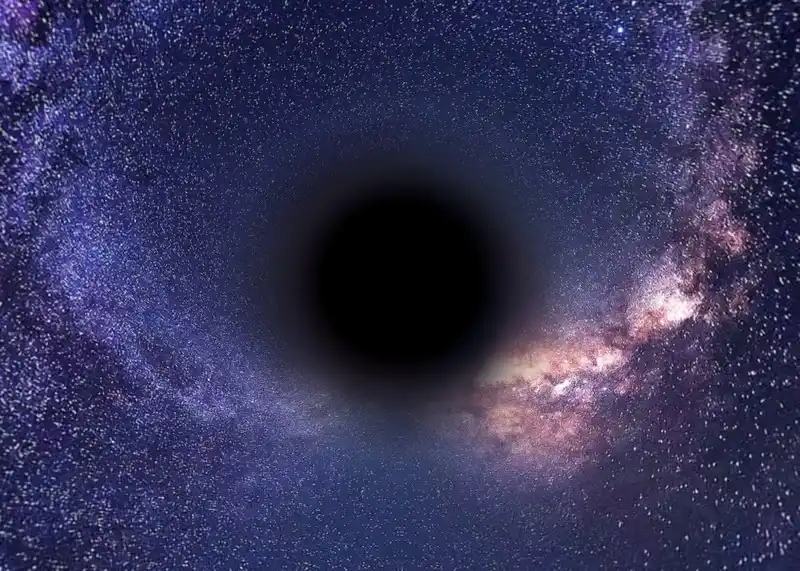
Unlike stars and planets, black holes do not emit visible light. Their presence is usually detected through their effects on nearby matter. Gas, dust, and stars can reveal a black hole’s existence through motion, radiation, and gravitational influence.
This invisible nature contributes significantly to public fascination. Black holes seem almost paradoxical because they can be among the most powerful objects in the universe while remaining hidden from direct observation.
How Modern Astronomy Changed Our Understanding
Advances in telescopes, satellites, and computational modeling have transformed black hole research. Scientists now possess evidence that black holes exist throughout the universe and play critical roles in galaxy formation and evolution.
Observations have moved black holes from theoretical concepts into measurable astrophysical realities.
What Exactly Is a Black Hole?
A black hole forms when an enormous amount of mass becomes compressed into an extremely small region of space. The resulting gravitational pull becomes so intense that escape becomes impossible beyond a specific boundary.
Contrary to common misconceptions, black holes are not cosmic vacuum cleaners that indiscriminately consume everything around them. Their gravitational influence follows the same physical principles as other massive objects, although on a much more extreme scale.
Understanding Gravity at Its Extreme
Gravity is responsible for holding planets in orbit and keeping galaxies together. In black holes, gravity reaches extraordinary levels due to immense mass concentrated into a compact volume.
The stronger the gravitational field becomes, the more dramatically it affects surrounding space and time.
The Concept of the Event Horizon
The event horizon represents the boundary surrounding a black hole. Once matter or radiation crosses this threshold, escape becomes impossible.
The event horizon is often described as the point of no return because it marks the region where gravitational forces dominate completely.
How Black Holes Are Born
The creation of black holes typically begins with the life cycle of massive stars. When certain stars exhaust their nuclear fuel, they undergo dramatic transformations.
These events produce some of the most energetic phenomena in the universe.
Stellar Collapse and Supernova Explosions
Massive stars maintain stability through a balance between gravity and nuclear fusion. When fusion ends, gravity overwhelms the star’s internal pressure.
The core collapses rapidly, often triggering a supernova explosion. If enough mass remains, a black hole may form.
Direct Collapse Scenarios
Some black holes may form through direct collapse without traditional supernova explosions. Under specific conditions, enormous clouds of gas can collapse directly into black holes.
These mechanisms may help explain the existence of supermassive black holes early in cosmic history.
Different Types of Black Holes Found in the Universe
Black holes vary significantly in size and mass. Scientists classify them into several categories based on their characteristics.
Stellar Black Holes
Stellar black holes form from individual massive stars. Their masses typically range from a few times to dozens of times the mass of the Sun.
These are among the most commonly observed black holes.
Intermediate-Mass Black Holes
Intermediate black holes occupy the gap between stellar and supermassive varieties.
Their existence helps astronomers understand how larger black holes may evolve over time.
Supermassive Black Holes
Supermassive black holes reside at the centers of most galaxies. Their masses can range from millions to billions of times that of the Sun.
These giants influence galaxy structure, star formation, and cosmic evolution on enormous scales.
Surprising Black Hole Facts That Challenge Imagination
Black holes possess characteristics that often seem impossible from an everyday perspective.
Time, space, and matter behave differently near these extreme objects.
Time Moves Differently Near a Black Hole
According to Einstein’s theory of relativity, strong gravity affects the passage of time.
Near a black hole, time slows significantly compared to distant observers. This phenomenon has been confirmed through numerous scientific observations and calculations.
Black Holes Can Influence Entire Galaxies
Supermassive black holes shape their host galaxies through powerful jets, radiation, and gravitational effects.
Their influence extends far beyond their immediate surroundings.
Some Black Holes Are Billions of Times More Massive Than the Sun
The largest known black holes contain unimaginable amounts of mass. Their gravitational reach affects vast regions of space.
These cosmic giants demonstrate the extraordinary diversity found throughout the universe.
How Scientists Detect Objects That Cannot Be Seen
One of the greatest challenges in black hole research involves studying something that emits no visible light.
Astronomers rely on indirect methods to gather information.
Observing Nearby Stars and Gas
Stars orbiting invisible objects can reveal black hole locations. Their motion provides valuable clues about mass and gravitational influence.
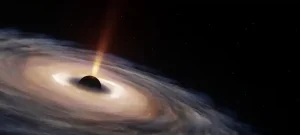
Gas falling toward black holes often produces intense radiation that telescopes can detect.
The Role of Gravitational Waves
Gravitational waves revolutionized black hole research. These ripples in spacetime occur when massive objects collide.
Their detection confirmed major predictions of relativity and opened a new era of astronomical observation.
Capturing the First Black Hole Image
The Event Horizon Telescope achieved a historic milestone by producing the first image of a black hole’s shadow.
This accomplishment provided direct visual evidence supporting decades of theoretical work.
Black Holes and Their Relationship With Galaxies
Modern astronomy increasingly recognizes the connection between black holes and galaxy evolution.
Evidence suggests that both may grow together over billions of years.
The interaction between supermassive black holes and surrounding matter influences star formation, galactic structure, and energy distribution. Understanding this relationship remains one of the most important areas of contemporary astrophysical research.
Common Myths About Black Holes
Popular culture often portrays black holes as unstoppable cosmic monsters that consume everything in their path.
In reality, black holes obey gravitational laws. If the Sun were replaced by a black hole of equal mass, Earth would continue orbiting normally. The primary difference would be the absence of sunlight and heat.
Another misconception is that black holes instantly destroy anything nearby. Distance remains an important factor. Many objects can orbit black holes safely under appropriate conditions.
What Black Holes Teach Us About the Future of Physics
Black holes sit at the intersection of general relativity and quantum mechanics. These two foundational theories work exceptionally well in most situations but become difficult to reconcile under extreme conditions.
Studying black holes may ultimately help scientists develop a unified framework capable of explaining gravity and quantum behavior together. Such a breakthrough would represent one of the greatest achievements in scientific history.
Expert Advice for Learning More About Black Holes
For anyone interested in black hole facts, focus first on understanding gravity, relativity, and stellar evolution. These topics provide the foundation needed to appreciate more advanced concepts. Follow discoveries from major observatories and space agencies because black hole research evolves rapidly. Modern astronomy is entering a golden age of observation, and new findings continue reshaping our understanding of these extraordinary objects. Staying curious and following scientific developments can make black hole research one of the most rewarding areas of space science to explore.
Conclusion
Black holes remain among the most fascinating and mysterious objects in the universe. Their immense gravity, invisible nature, and profound effects on space and time challenge our understanding of reality itself. From stellar remnants to supermassive giants residing in galactic centers, black holes play crucial roles in shaping the cosmos.
Recent discoveries have transformed black holes from theoretical predictions into observable astronomical phenomena. Through advanced telescopes, gravitational wave detectors, and sophisticated modeling techniques, scientists continue uncovering remarkable insights into their behavior and influence. As research progresses, black holes may provide answers to some of the deepest questions in physics while revealing new mysteries that inspire future generations of explorers and scientists.
FAQs
What is a black hole in simple terms?
A black hole is a region of space where gravity is so strong that nothing, including light, can escape once it passes beyond the event horizon.
Can a black hole destroy Earth?
There is no known black hole close enough to threaten Earth. Black holes only affect objects that come within their gravitational influence.
How was the first black hole image captured?
The first image was produced by the Event Horizon Telescope, a global network of radio telescopes working together to observe the black hole at the center of galaxy M87.
Do black holes eventually disappear?
According to theoretical physics, black holes may slowly lose energy through Hawking radiation and eventually evaporate over extremely long timescales.
Why are black holes important to science?
Black holes help scientists study gravity, spacetime, galaxy evolution, and the fundamental laws governing the universe.